In Praise of Panfish
by John Evans
(San Antonio, TX)

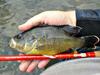
Redear Sunfish (Shellcrackers) strike like you owe them money.


|
|
|

|
All anglers thrill to the excitement of catching a beautiful rainbow trout or landing a lunker largemouth bass. We love to share those photos and stories, don’t we? We stretch our hands out in front of us and say, “He was THIS big!”
But the truth is, the most common species caught in America, by tenkara methods or otherwise, are the many varieties of panfish. Whether you’re talking bluegill, redbreast, green sunfish, shellcracker, or Texas cichlid, these are the fish that have the greatest populations and the widest distributions. Also, most of these panfish eagerly take small nymphs, streamers, live, and preserved baits. How often would we have caught NO fish if it hadn’t been for sunfish?
And can’t you just see the smile on a young angler’s face the first time he pulls a three-inch bluegill from the water? You would have thought that he’d just landed a tarpon or a tuna!
Plus, many of these species are underestimated for their fighting ability. True, most of them are small, but if you’ve ever hooked a nine-inch bluegill or a one-pound cichlid in deeper water, you know exactly what I’m talking about. They turn their broad sides to the current and fight like Jack Dempsey.
Often, we tend to lump panfish together, but each has its own characteristics. Shellcrackers (redears) and green sunfish slam a bait all at once, as if you owe them money. They’re sudden in their strikes and tenacious once hooked. Rio Grande Perch (Texas cichlids) often just “mouth” the bait, but—once they’re hooked—they head straight for the bottom like they’ve swallowed an anvil. Bluegills and yellow bellies vary a lot in how they take the bait and fight, but a big one will put a bend in your rod that you won’t soon forget. Some of my most memorable battles have been with oversized sunfish. It’s all about matching the rod to the fish.
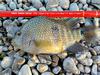
Which panfish is my favorite? If I had to pick one, it would be a large green sunfish. They have a fighter’s heart and a never-quit attitude that’s hard to beat. Study the second photo above and you can almost see the determination in that fish’s eye. When I finally landed that bruiser, he had a honey bee in his mouth that he’d swallowed. Now that’s a tough fish!
So let’s appreciate and praise panfish for their fine qualities. Perhaps you’ve just received that new tenkara rod in the mail, and you’re thinking, “I have to go catch a fish with this pole right now!” What spot comes to mind? Often it will be that little fishing hole brimming with bream! We all know some spots like that, and aren’t we thankful for them?
Return to Your Tenkara Stories.
“The bitterness of poor quality remains long after the sweetness of low price is forgotten” - Benjamin Franklin
"Be sure in casting, that your fly fall first into the water, for if the line fall first, it scares or frightens the fish..." -
Col. Robert Venables 1662
As age slows my pace, I will become more like the heron.
We've all had situations where seriously chewed up flies kept catching fish after fish after fish. It is no sin to tie flies that come off the vise looking seriously chewed up.
Warning:
The hooks are sharp.
The coffee's hot.
The fish are slippery when wet.
Beware of the Dogma
All the hooks sold on TenkaraBum.com, whether packaged as loose hooks or incorporated into flies, are sharp - or as Daiichi says on their hook packages, Dangerously Sharp. Some have barbs, which make removal from skin, eyes or clothing difficult. Wear eye protection. Wear a broad-brimmed hat. If you fish with or around children, bend down all hook barbs and make sure the children wear eye protection and broad-brimmed hats. Pay attention to your back cast so no one gets hooked.
Also, all the rods sold on TenkaraBum.com will conduct electricity. Do not, under any circumstances, fish during a thunder storm. Consider any fishing rod to be a lightning rod! Fishing rods can and do get hit by lightning!


If you enjoy spin fishing or baitcasting please visit my sister site Finesse-Fishing.com.